Open two browser tabs on Augusta Road and you will find two different median prices before you have even started comparing it to another neighborhood. One tab, pulling twelve months of closed sales, says $760,000. Scroll down the same page and the active listings median reads $924,875. Same neighborhood, same source, same afternoon. The gap is $164,875.
That is not a typo. It is what happens when a neighborhood sells 74 homes a year instead of 700. If you are comparing Augusta Road to North Main because you have already seen a citywide median on a portal and want to know what your budget actually buys, the honest answer starts here: the number you are looking at depends more on which window and which property type someone chose than on anything happening to the street itself.
One Page, Two Different Medians
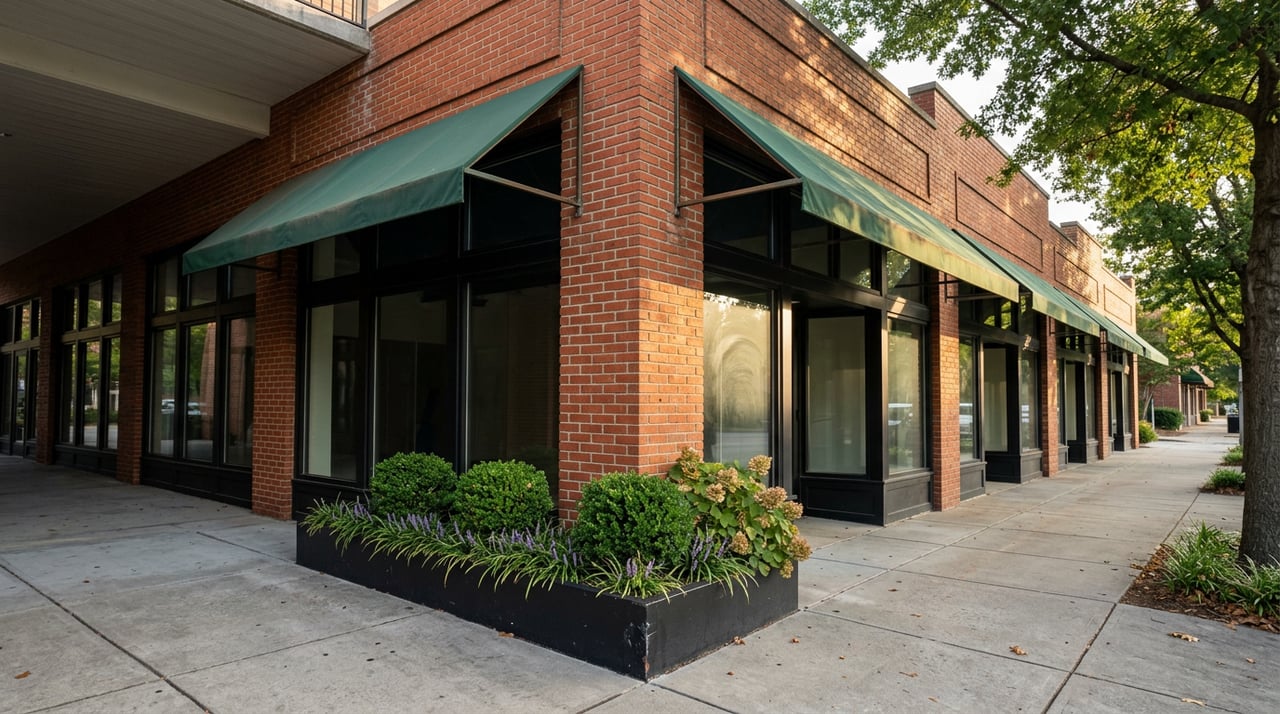
Augusta Road, the walkable in-town neighborhood between downtown Greenville and Greenville Country Club, sold 74 homes in the twelve months ending mid-2026 at a median of $760,000, up 3.8% from the year before. That figure covers closed sales. Look at the same neighborhood's 18 active listings and the median jumps to $924,875, with an average list price over $1 million.
Neither number is wrong. A sold-price median tells you what buyers actually paid. An active-listing median tells you what sellers are currently asking. On a street where teardown lots and full-scale renovations sit next to original Craftsman bungalows dating back to 1910, the asking side skews toward whoever happens to be marketing a new build that month. A single $2.8 million new construction listing pulls the active median up in a way that would barely register in a market with thousands of annual sales.
North Main Has Four
If Augusta Road produces two medians from one page, North Main produces four from four different pages, and none of them agree on direction.
| Source basis | Property scope | Window | Reported median | Change reported |
|---|---|---|---|---|
| Single-family, trailing 12 months | Single-family only | 12 months ending mid-2026 | $474,950 | Down 2% |
| Townhomes only | Townhomes only | As of July 2026 | $582,450 | N/A |
| Neighborhood profile, sold comps | Mixed types | 12 months ending mid-2026 | $710,000 | Up 28.5% |
| Redfin-sourced market report | Mixed types | 3 months ending June 2026 | Roughly $915,000 | Up 10.5% |
Four sources, four scopes, four numbers spanning nearly $440,000. The single-family figure is dragged down by the neighborhood's stock of 1940s brick bungalows on quarter-acre lots, some still unrenovated. The three-month figure is dragged up by whatever custom builds happened to close in that particular quarter. Neither is describing a different North Main. Both are describing a real slice of the same neighborhood, just different slices.
Why the Number Keeps Moving
Three things are doing the work here, and once you see them you will notice them on every intown Greenville neighborhood page you read.
The trailing window matters more than people assume. A three-month median in a low-volume neighborhood can swing on a handful of closings. A twelve-month median smooths that out but goes stale faster, since it is still counting sales from a year ago.
The boundary definition is rarely the same twice. One site's North Main might stop at Stone Avenue. Another might stretch it toward Wade Hampton Road, pulling in a different price tier entirely.
The property mix shifts the average even when no individual home changes in value. This is the clearest story in the Augusta Road data. Over the three months ending June 2026, Augusta Road's median sale price fell 20.2% year over year, which sounds like a correction. But sales volume rose 41.3% over the same period, and price per square foot fell only 3.5%. That combination means more homes traded, they skewed smaller and less expensive than the prior year's crop, and the median moved because the mix moved, not because any given house lost a fifth of its value.
The Number That Barely Budged
Price per square foot is the steadier yardstick on a street like Augusta Road, precisely because it does not care whether a $2.8 million new build or a $525,000 bungalow happened to close last month. Augusta Road's per-square-foot figure sat at $317 based on early 2026 data, and even during the quarter when the median dropped 20%, per-square-foot pricing only slipped 3.5%. If you are trying to gauge whether a specific offer is fair, that number tells you more than any median will.
North Main's own reporting does not give a clean per-square-foot figure to compare across sources the way Augusta Road's does, which is itself useful information. It means anyone quoting you a single North Main median without also showing you the underlying property type and square footage is handing you a number that cannot be checked.
What Actually Held Steady Between the Two Streets
Here is the part that surprised me the most while pulling these figures together. The price data disagrees wildly across sources, but the velocity data does not. Augusta Road homes sell in roughly 52 to 64 days depending on the source. North Main homes sell in 43 to 58 days. Those ranges overlap and none of them scream buyer's market or feeding frenzy. Every source, regardless of how it defined the median, agreed that inventory on both streets stays thin, with Augusta Road running around 18 active listings and North Main closer to 12 to 20.
That consistency matters more than the price headline. Days on market and active listing counts are harder to distort with a boundary tweak or a trailing window change, because they are counting events, not dollars. When the number that is hard to manipulate agrees across sources and the number that is easy to manipulate does not, trust the harder one.
Both neighborhoods also show signs of steady, unglamorous reinvestment rather than a speculative run-up, which is worth knowing if you are weighing long-term value over a single quarter's median. The Augusta Road Business Association still runs Shagging on Augusta and Lights on Augusta each year, the kind of recurring local programming that tracks with sustained walk-to-dinner demand rather than a short-term flip. In North Main, Norden on Stone, a Scandinavian-inspired townhome project from BLOM Design Studio and Cobblestone Homes, is adding new stock within walking distance of Methodical Coffee, Asada, and the Elias Earle Historic District, while the neighborhood's weekend trolley keeps it tied to downtown.
What to Ask Before You Trust Either Number
If you are seriously comparing these two streets, skip the portal median entirely and ask your agent for three things:
- Trailing 90-day sold comps, not active listings, broken out by square footage so you can calculate price per square foot yourself.
- The exact boundary the comp set uses. Ask where it starts and stops on a map, not just the neighborhood name.
- The property type mix in that comp set. A townhome-only median and a single-family median for the same neighborhood can differ by six figures.
None of this is complicated once you know to ask. It is just information that a headline median is not built to carry.
A Couple of Questions Worth Asking Yourself
Is Augusta Road or North Main more expensive? Depending on which slice of data you use, either answer is defensible. The more useful question is which slice matches what you are actually shopping for: a renovated single-family bungalow, a new-construction townhome, or something at the top of either market.
Why did North Main's median jump 28.5% in one report and drop 2% in another? Both can be true at once. The 28.5% figure blends property types over twelve months. The negative figure isolates single-family homes over the same window. They are answering different questions, not contradicting each other.
The citywide number you already saw, a median hovering around $525,000 over the three months ending June 2026, is a reasonable starting point for Greenville as a whole. But Augusta Road and North Main are small, high-value pockets where a handful of closings can swing the headline by six figures in either direction. If you want to know what your money actually buys on either street, the median is where the conversation starts, not where it ends.
If you are weighing Augusta Road against North Main, or trying to figure out what either one means for your specific budget and timeline, Laurel Caylor can walk through the real comps street by street. Let's Connect — Schedule Your Consultation.